
I was once posed a probing question: What should we do if our dogs do not love us enough? This query immediately took me back to a conversation I shared with my late husband, Uttam.
I remember looking at Nishi and Cheeru, soundly sleeping, and asking Uttam, “What do you think love is? How would you describe it?”. Uttam confessed, “I don’t know what it is, but it seems to hurt just a little bit, in a nice way”. This seemingly odd description is understandable, as anyone who tries to define or describe love seems to fail gloriously. Poets and authors dedicate lifetimes to this endeavour, and movies repeatedly attempt to capture it, yet no two people appear to agree on its nature. Some describe it as a warm sensation. Others claim you simply know it when you experience it, but admit it cannot be defined. Intriguingly, one friend said that she grinds her teeth when she looks at her dog, she loves so dearly and thus describes love as “dental pain”.
The Experiential Nature of IT
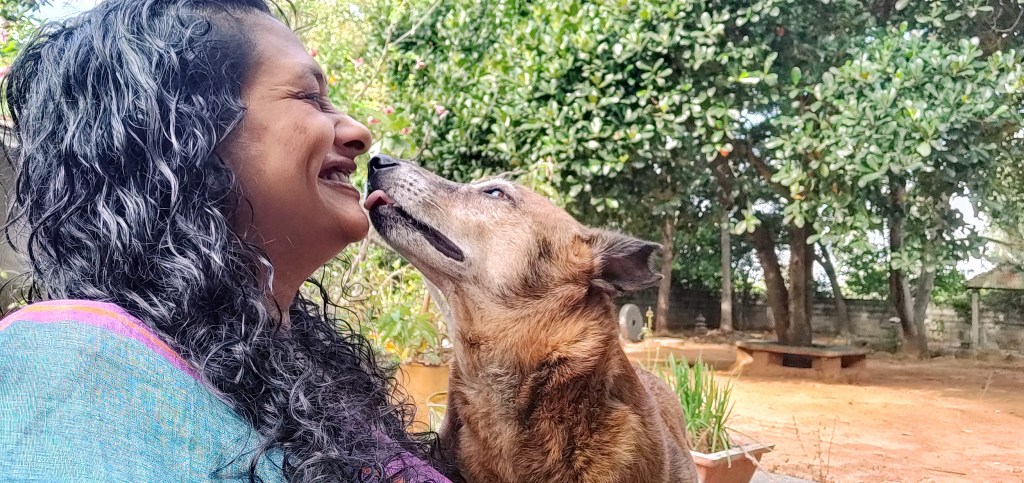
The actual definition of love is irrelevant. However, one crucial element emerges from these discussions: love is fundamentally a feeling or sensation one feels. Crucially, it is not a transaction; it is not something we receive from another. Instead, it is something we feel for another, when we are in their presence or thinking of them.
Love is not a transaction. It is a feeling!
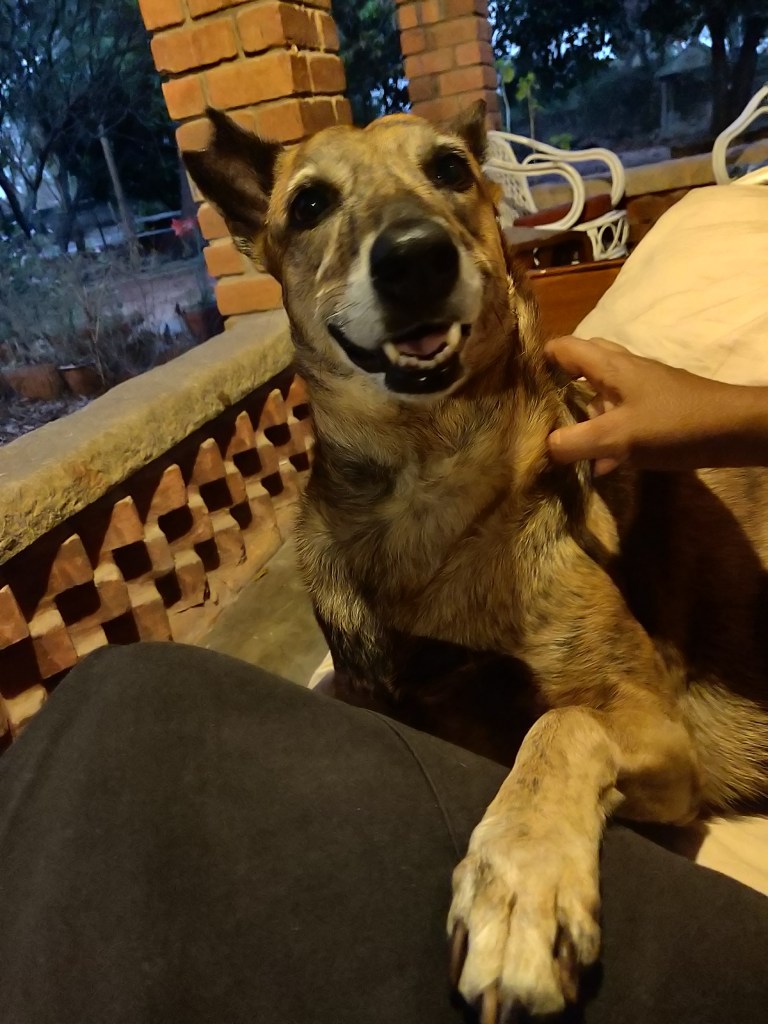
After I lost my wonderful husband and my dogs, I sank into an abyss, lamenting that I had no one left to give me love. I have since realised that love is not something I receive, but rather something I feel. Just the thought of Uttam and the girls still fills my heart with love—I feel ‘IT’. While I cannot articulate precisely what IT is, I know how it feels. I feel IT when I meet close friends who supported me through my grief. I feel IT when the free-living dogs around my house choose me every day. I experience that amazing feeling that I have come to recognise as love. I feel IT! I must confess that it hurts to think that some of the ones I feel this for most intensely are not alive to feel the same towards me, but that grief does not stop me from feeling IT.
Experiential love, not performative love
Cultural influences seem to be steering us towards an idea of love that is entirely performative. The tales we tell are of ‘grand gestures of love’ – giving up ones life to save that of loved ones, expensive gifts and grand proposals, adventures and expeditions undertaken for loved ones, impressive achievements in dedication of that which we love, so on and so forth. This perhaps then leads us in the direction of expecting such performances from those we love, in order for us to believe we are loved. But in all of these hero-stories, we seem to sideline the experiential aspect of love. Love is not just what we receive and love does not have to be self sacrificial. Love is felt within us, or rather evoked within us by those we claim to love. It does not have to be given or received. Uttam, Nishi and Cheeru are all gone. There is no one to give love to or receive love from and yet I feel it stronger than ever before. This is what inspires me to talk about love as experiential, while doing away with the performative aspects of it. If you feel the desire to experience love this way, while shedding the performative expectations of love, then read on.
Reframing the Question: A Call to Look Inward
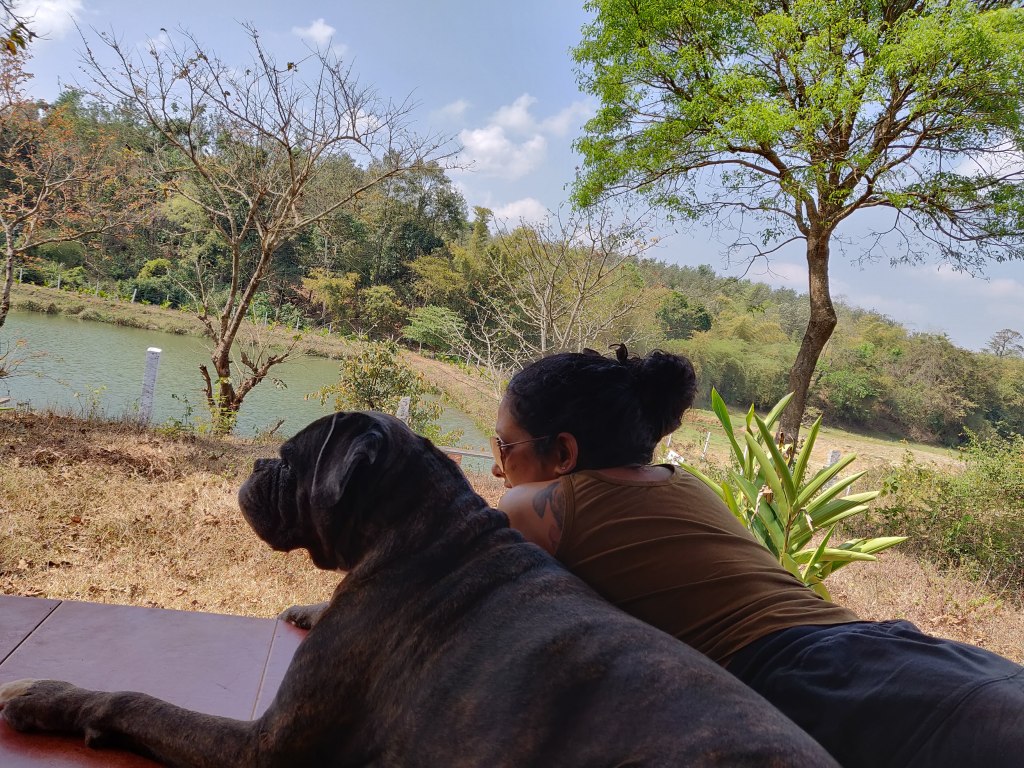
Let’s return to the topic of love for our dogs. If we approach love with this emphasis on the experiential aspect, rather than the performative act, what does it truly mean to say, ‘my dog does not love me’?. It means we are not feeling those sensations—we are not feeling IT—in the presence of our dog.
This is a profound realisation, because this problem is not fixed by trying to change the dog or the dog’s behaviour/performance in any way. This situation requires us to look inward. Oh boy! We are now in dangerous territory, aren’t we. Should you be brave enough to continue reading, I congratulate you on your fortitude. Let’s keep going, shall we?
So, what should we do about not feeling loved by our dogs? We must start by reframing the question. We recognise that the issue is not that we are not feeling loved by the other, but that we are not feeling those sensations within ourselves. We are not feeling IT! Framed this way, the next step becomes evident: we ask ourselves, why are we not feeling IT?.
If we are not feeling love, we should be asking ourselves why we are not feeling it.
I cannot answer this for you, but I can share my own journey. There have been times I have not felt IT, and upon closer examination, the reasons have typically been:
- The trust the dog is exhibiting towards me feels inadequate to me.
- I am overwhelmed with caregiving responsibilities and I have no brain-space for love.
- I am dysregulated and all I feel is anxiety or anger. I can’t slow down enough to feel warm love.
- The ever-pervasive childhood trauma of not knowing how to receive and recognise love.
Admitting these deepest hurts requires a kind of soul searching that is exhausting, painful, and scary. I must admit that achieving this level of acceptance about these injuries was only possible because of the grief I was forced to endure. This was not a choice I made consciously. However, having done the work, I can now call out the reasons for not feeling IT. I feel no shame or fear when I identify the reasons, which enables me to take action.
Love as a choice
It has been my experience that feeling love is a choice we make deliberately. We do not have to wait for others to give it to us or behave/perform in a certain way; we do not have to earn it, nor can we demand it. At best, we can choose to feel it and then acknowledge when we do. Indeed, there are some real challenges one may need to overcome to be able to choose love.
We can choose to feel love and don’t have to lament not having someone give it to us.
Here are some practical things I do to overcome my challenges.
- If I am simply simply dysregulated, I walk away from those I love so I can regulate myself, heal, recover and return with a clearer mind. I sort myself out first and come with the deliberate intent of feeling IT. Feeling love is a choice I make. Since I know what love feels like, I will myself to feel it in their presence.
- If I am overwhelmed by caregiving responsibilities, I drop some of the responsibilities, dial down my expectations of myself, seek help and make peace with the fact that I cannot provide more than I am capable of. I talk it out with good friends, who are able to validate my choices and remind me of what I am providing. I get kinder on myself, to accept that which I cannot provide for. And in that space of kindness, I also see the ones in my care extending that kindness towards me and whoosh…IT washes over. I feel IT.
- If you are like me, this is the point at which my childhood trauma surfaces and I feel selfish for wanting to feel IT. Friends and therapist to the rescue! How blessed am I, to have friends I can call in the dead of the night, because I am feeling guilt about feeling love. Whoosh! There, I just felt IT again, just thinking of these friends.
The Challenge of Trust
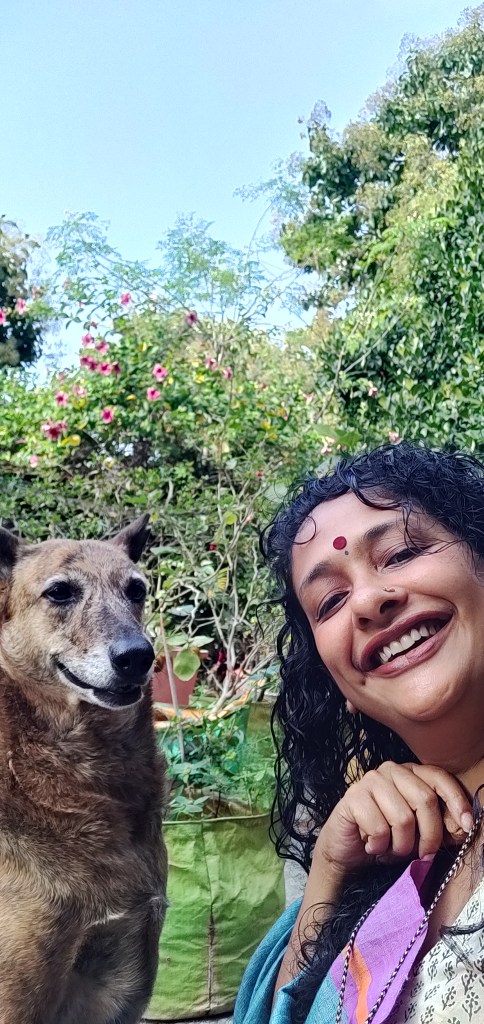
Trust requires a slightly different approach. If dogs do not receive the safety I offer, I find it hard to feel love. I need to feel trusted. But reframing helps again. For instance, a dog named Dude found it very difficult to receive safety in the form I offered it. I realised that was his baggage, not mine; it was not a commentary on me, so I had to stop personalising it. I began to look for something I could offer that he could receive.
I need to dedicate sometime to tell the story of how I gradually won his trust. But just to give an example, at one point I saw that he had started to enjoy watching me interact happily with other dogs of his family. That is all he could receive from me. I noticed him prancing about happily around me and the rest of the dogs, enjoying our interaction. He was definitely feeling something, just that it was not what I expected or wanted. Once I accepted his feelings for what they were, I felt IT. I felt IT again when I acknowledged what he had to overcome to slowly close the gap between us. It’s interesting to me that I also feel IT when I think of the patience I have had with him. It is not about transactions. Love is about interconnectedness and it can be felt towards oneself too, in the context of who we are in their presence. Love is intriguing, isn’t it?
Oxytocin & training
Of course, we could define love simply as the phenomenon that involves generation of oxytocin. That would be technically correct, albeit an unhelpful and incomplete. There indeed is evidence to show that we generate oxytocin when we look at our dogs or touch them (Nagasawa et al. 2009, MacLean and Hare, 2015) and that is perhaps what we describe as warmth or dental pain, depending on our subjective experience of it. If we were to use this parlance, then I suppose, feeling unloved by our dog means we are not generating oxytocin when we come in contact with them or think of them. But this way of defining it not only loses all the nuance contained in the above discussion, it also feels like something totally out of our control. Generation of chemicals in the body does not seem like a voluntary action. It does not really feel like a choice we make, and yet it is.
Love can’t be trained or demanded. It has to be felt within.
Another unhelpful perspective is to consider this a failing on the dog’s part to demonstrate specific behaviour that signals love to us. This is performative love. If this display is missing, we may conclude that the dog is not feeling love towards us, but that is purely speculative and is a lament that leaves us feeling helpless and unloved. We might try to address this by ‘training’ the dog on the behaviours we’d like to see. But, data suggests there’s no guarantee that we will feel IT, as a result of that performance (Marshall-Pescini et al. 2019, Powell et.al. 2019, Nagasawa et.al. 2015).
Life lessons from dogs
Ultimately, things like happiness, joy, and love continue to befuddle and elude our generation. If there is anything I learnt when I hit rock bottom that widowhood sent me to, it is that joy and love need to be consciously and deliberately sought. I vehemently choose IT each day that I feel strong enough to choose it. On days I don’t feel that strong, I focus on self-care, so I arrive at a point where I can generate the joy and love I would like to feel within me. There are my feelings and I have the freedom to do what it takes to make me feel what I want to feel. This realisation is empowering.
When we discuss ‘love,’ we are dealing with relationships, not just a dog. These feelings within us are agnostic of ‘the other’. They are part of our own resilience and our interconnectedness. By honestly examining our relationship with our dogs and repairing what is broken, we learn about ourselves, show up better for the humans around us, and eventually, show up better for ourselves. This is why people who embrace The BHARCS Way claim that they have got much more from it than just learning about dogs, it is about life itself. Dogs then only become a means to and end, the end being the strengthening of all our bonds, both with the world around us and ourselves.
References
- MacLean, E.L. and Hare, B., 2015. Dogs hijack the human bonding pathway. Science, 348(6232), pp.280-281.
- Marshall-Pescini, S., Schaebs, F.S., Gaugg, A., Meinert, A., Deschner, T. and Range, F., 2019. The role of oxytocin in the dog–owner relationship. Animals, 9(10), p.792.
- Nagasawa, M., Mogi, K. and Kikusui, T., 2009. Attachment between humans and dogs. Japanese Psychological Research, 51(3), pp.209-221.
- Nagasawa, M., Mitsui, S., En, S., Ohtani, N., Ohta, M., Sakuma, Y., Onaka, T., Mogi, K. and Kikusui, T., 2015. Oxytocin-gaze positive loop and the coevolution of human-dog bonds. Science, 348(6232), pp.333-336.
- Powell, L., Edwards, K.M., Bauman, A., Guastella, A.J., Drayton, B., Stamatakis, E. and McGreevy, P., 2019. Canine endogenous oxytocin responses to dog-walking and affiliative human–dog interactions. Animals, 9(2), p.51.
About The Authors

Sindhoor is a canine behaviour consultant, a canine myotherapist, an anthrozoologist and an engineer by qualification. She researches free living dogs in Bangalore, India. She has presented her findings at major international conferences in the US, UK and has conducted seminars in Europe, UK and South America. She has been invited as an expert on several podcasts, including a few on NPR radio. She maintained a weekly column on dog behaviour, in The Bangalore Mirror for two years. She is a TEDx speaker, the author of the book, Dog Knows. National Geographic calls hers a ‘Genius Mind’ in the bookazine, Genius of Dogs. She is currently the principal and director of BHARCS. BHARCS offers a unique, UK-accredited level 4 diploma on canine biosociopsychology and applied ethology.
 The BHARCS Blog